Force 5 tuning guide: rig setup and sail trim
Getting the most from a Force 5 on the race course starts before you launch. This guide covers rig setup, sail controls, and trim adjustments for light, medium, and heavy air.

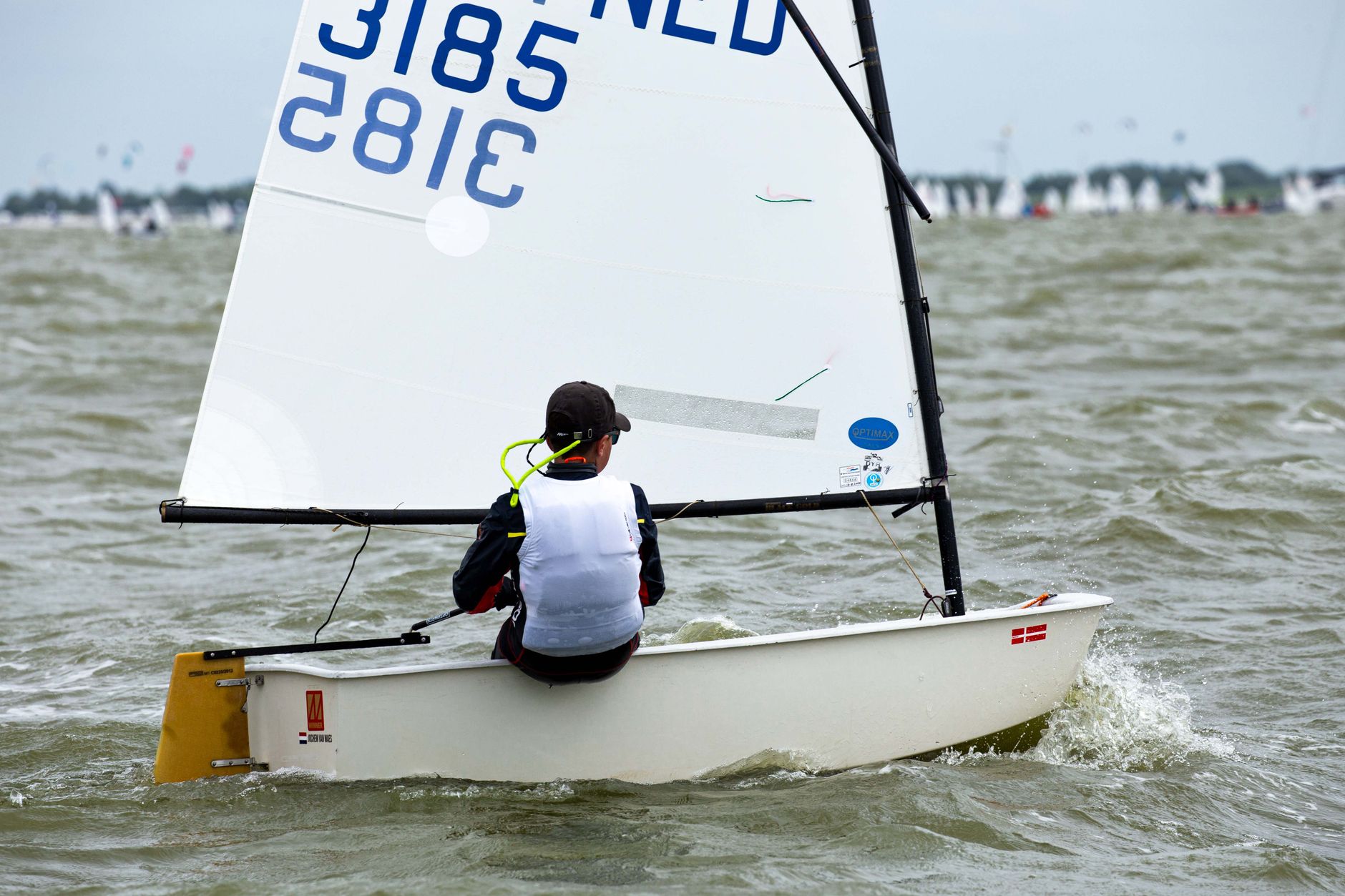
Photo by Ruben Boekeloo on Pexels
Force 5 tuning comes down to a relatively simple rig with a surprising range of adjustment. The boat carries a single sail of approximately 91 square feet on a rotating mast, and almost every control on the boat affects boat speed in a meaningful way. Get the basics right and the Force 5 rewards you with a lively, responsive feel upwind and a powerful, fast-planing reach in a breeze.
This guide covers rig setup ashore, then moves through the sail controls you'll use on the water. It distinguishes settings that are class-rule constrained from those left to owner discretion. Where a setting varies by wind strength, that's called out clearly. All values described here represent common owner practice rather than certified class specifications; verify critical measurements against current class documentation before racing.
Understanding the Force 5 rig
The Force 5 rig is a fractional, rotating, unstayed mast system. There is no forestay or backstay. Shrouds run from the chainplates on the gunwales to attachment points partway up the mast. The mast rotates to align with the boom, reducing drag and improving flow across the sail. This rotation is a key tuning tool, not just a design detail.
Because the rig has no backstay, mast bend is controlled primarily by the vang, the cunningham, and the shroud tension. If you've come from a Laser or a Sunfish, the rotating mast and the interdependence of these controls will feel different at first. Spend time setting up ashore and the on-water adjustments become instinctive. The Force 5 owner's guide covers the full rig layout and component names if you need a reference before diving into tuning.
Mast rake
Mast rake sets the fore-and-aft angle of the mast. More rake pushes the center of effort aft, which increases weather helm and helps the boat track upwind. Less rake moves the center of effort forward, reducing helm and suiting choppier, lighter-air conditions where you want the bow to pay off easily.
A common starting point is a small amount of aft rake, measured by hanging a tape from the top of the mast and reading the distance to the aft edge of the mast partner at deck level. Owner-reported figures vary, and the right setting depends on your weight, local conditions, and sail age. Adjust in small increments and sail the boat before changing anything else.
Shroud length controls rake on the Force 5. Longer shrouds rake the mast forward; shorter shrouds rake it aft. Most owners use adjuster pins or a small number of shackle positions rather than infinite adjustment. Pick a setting and sail it consistently before changing.
Shroud tension
Shroud tension affects mast column stiffness athwartships and fore-and-aft mast bend in the lowers. Too little tension and the mast pumps and falls off to leeward in a gust. Too much and you're fighting unnecessary weather helm in light air.
The widely used thumb test gives a rough baseline: push the shroud with your thumb at arm's height. It should feel firm but not bar-tight. Sight up the sail track after the boat is rigged and afloat. The mast should be straight or show a very slight even bend. A hooked tip or reverse bend at the upper section indicates excessive compression, usually from over-tight shrouds combined with heavy vang load.
Mast rotation
Mast rotation opens the slot between the mast and the sail's luff pocket. Rotating the mast so the leading edge aligns roughly with the boom reduces turbulence and improves flow on both tacks. Most Force 5 sailors set rotation by eye using a line or spreader indicator when rigging.
Too little rotation and the mast leeward face creates a turbulent shadow on the sail. Too much and you introduce a hard crease at the luff. Upwind, aim for the leading edge of the mast pointing toward the clew on a line roughly parallel to the boom. Downwind, maximum rotation opens the sail to the breeze and is usually left to run naturally.
Outhaul
The outhaul controls foot depth. More outhaul flattens the lower part of the sail, depowering it. Less outhaul creates a deeper, fuller foot, adding power in light air.
In light to moderate breeze, ease the outhaul to add power. Aim for a slight curve at the foot, not a tight, flat-pulled shape. As wind builds past the point where the boat becomes difficult to hold flat, haul the outhaul on to flatten and depower. In a hard blow, the outhaul should be close to fully extended.
Cunningham
The cunningham pulls the luff of the sail down, moving the draft forward and opening the leech. It's your primary tool for depowering in a building breeze without reefing.
In light air, keep the cunningham off. The sail should show a smooth luff with no horizontal wrinkles. As breeze builds, apply cunningham tension progressively. Wrinkles along the luff that pull toward the cunningham cringle are a sign of too much tension. Apply just enough to keep the luff entry clean and the draft in the forward third of the sail.
Many Force 5 sailors neglect the cunningham until conditions are already difficult. It's more effective to apply it early and incrementally than to fight the boat in a gust and then scramble to adjust.
Boom vang
The vang is probably the most powerful control on the boat. It limits how high the boom rises when the sheet is eased, controls leech twist, and introduces mast bend when loaded hard. All three effects change simultaneously when you adjust it.
Upwind in moderate breeze, the vang holds the boom roughly horizontal and keeps the leech closed at the top batten. Ease the vang slightly in light air to open the top of the sail and spill pressure. Increase vang tension progressively as breeze builds. Heavy vang tension bends the mast, flattening the sail and opening the leech for a powerful but controlled shape.
Reaching and running, the vang holds the boom from skying when the sheet is eased. Without vang, the top of the sail twists off and you lose power. Keep enough vang on downwind to hold the top batten roughly parallel to the boom. Too much vang on a broad reach can pull the mast out of column and make the boat want to broach.
Sail trim upwind
Trim the sheet until the leech telltales (if fitted) flow consistently. The top telltale should break or stall first. If the top telltale stalls while the lower two are still flowing, the leech is too closed: ease the sheet slightly or increase vang tension to open it.
Aim to sail at a consistent heel angle. The Force 5 is fast at a small angle of heel, perhaps 5 to 10 degrees, where the hull's waterplane is at its most efficient. Excessive heel, especially in gusts, adds weather helm and drag. Use body weight, cunningham, vang, and sheet ease in that order as the breeze builds.
Sail trim reaching and running
On a reach, ease the sheet until the luff begins to flutter, then trim back until it stops. Keep the boat as flat as possible. Heel to windward in light air on a reach to reduce wetted surface; heel to leeward only when you're trying to steer the boat by gravity in very light conditions.
Downwind, the Force 5 planes quickly in a breeze. Ease the vang enough to let the leech breathe, keep the sheet eased to the point just before the luff begins to collapse, and use body weight to encourage the bow to lift onto the plane. Once planing, weight moves aft slightly to keep the bow clear of the water.
Tuning for conditions
Light air (under 8 knots): ease outhaul, ease cunningham to off, reduce vang, sail with slight heel to leeward to assist the sail in holding shape. Keep movements smooth.
Medium breeze (8 to 16 knots): outhaul moderate, cunningham just on, vang firm upwind. This is the sweet spot for the Force 5 and the range where tuning pays off most obviously. The boat should feel balanced with perhaps 10 to 15 degrees of heel needing constant correction through the mainsheet.
Heavy air (above 16 knots): outhaul fully on, cunningham on firmly to flatten the sail and move draft forward, vang on hard. Hike aggressively. If the boat still overpowers you, check that all controls are at maximum depower before considering whether conditions are outside your experience range for the boat.
Common tuning mistakes
Not rotating the mast enough is probably the most frequent oversight among new Force 5 sailors. It's easy to skip and the improvement from correct rotation is immediate on both tacks. Check it before every sail.
Leaving the cunningham off in any breeze above 10 knots is the second most common error. Without it, the draft migrates aft and the boat becomes harder to point and harder to hold flat. Apply it progressively and the boat rewards you with a cleaner, more neutral feel.
Finally, don't overlook the connection between vang and mast bend. Adding vang tension upwind in a breeze doesn't just control the boom: it bends the mast, flattens the sail, and opens the leech. If you're pulling the cunningham on aggressively and still fighting heel, check whether your vang tension is contributing to a flat, open sail shape or simply holding the boom angle.
Force 5 tuning rewards methodical sailors. Change one control, sail a few hundred meters, and feel the difference before touching the next one. Over a season, small adjustments compound into significant boat speed gains.